
Verification and validation of Software (V&V) focuses primarly on the requirements, it verifies that these are complete and correct also the result of the development phases should comply with the requirements but why do this?. Well it seems that all of this is with the purpose to get rid of all the flaws of software lifecycle artifacts, one step at a time.
Here is a good and simple video of V&V:
There seems to be 3 main implementations of V&V which are:
- Testing(Post Process): focuses in dynamic execution of hard-coded software.
- Lifecycle Frameworks (In Process): These are encyclopedic taxonomies of abundant software defect elimination techniques.
- Lifecycle Methodologies: Step-by-step metric and measurement-based approaches.
Testing (Post Process)
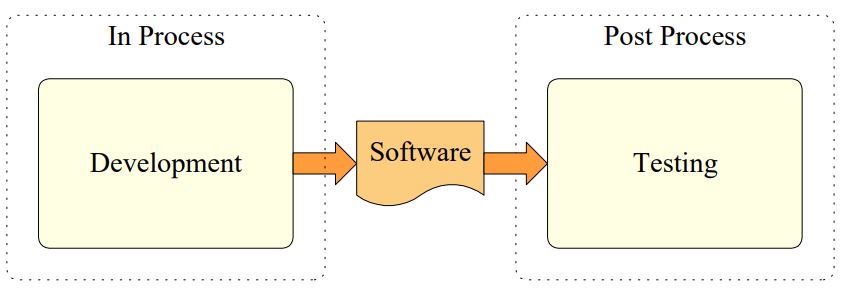
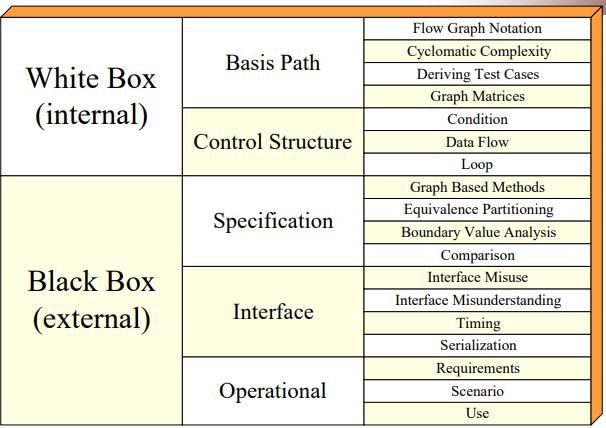
Testing is diveded into 2 categories the white box testing and the black box testing:
- White box: This method focuses in internal tests which focuses in examining software.
- Black box: External testing which focuses on analyzing and excercise the software.
Here are some techniques used in both methods:
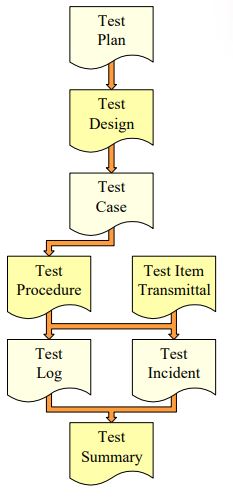
The IEEE Standard on testing documents is to act as a framework for test documents so there can be a structure in the process and there are 7 documents which have the following flow:
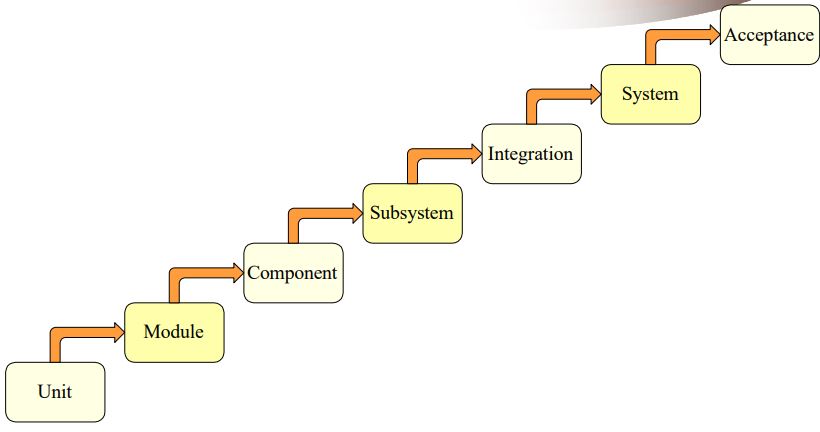
There also exists the testing levels which are perfomed in a specific hierarchy that keeps inceasing:
Lifecycle Frameworks (In Process)
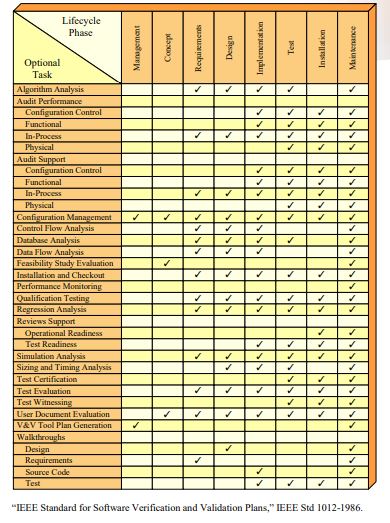
IEEE says that V&V frameworks gives minimun and uniform requirements so there can be a comprehensive evaluation of each phase of any project to make sure of the following:
- The flaws and bugs are corrected ASAP.
- The cost, riski and scheduled effects are minimize
- Improvement in software quality and management
- Fast evaluation of any changes or consequences.
Here are some tasks that can be done along with the lifecycle phase:
Lifecycle Methodologies (In Process)
Lifecycle methodologies are more compared to lifecycle frameworks because they are predictive, measurable, and very effective, but they also are less because they are lean and reduced to only the essential.
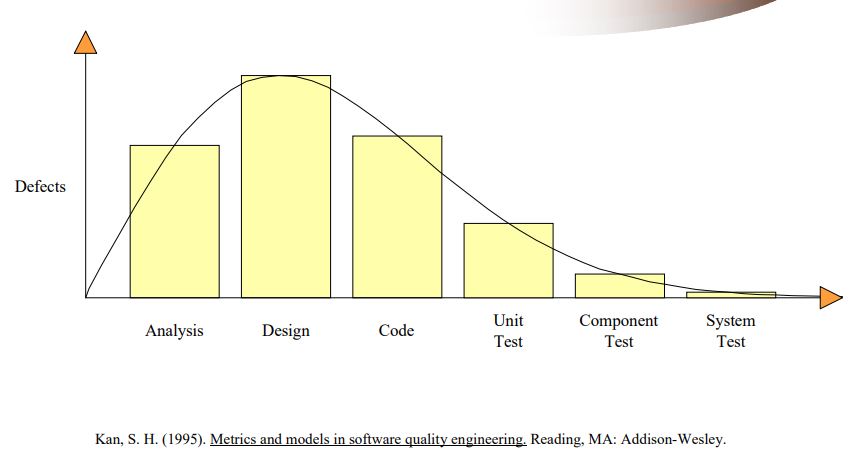
It seems that the best way to approach V&V is through Life cycle methodologies which are fast and efficient. Compared to Testing that is inefficient LifeCycle frameworks that are not easy to understand. so it seems we have a winner.

Bibliography:
V & V Lifecycle Methodologies. (2002). Retrieved from https://www.stickyminds.com/article/v-v-lifecycle-methodologies#:~:text=According%20to%20the%20IEEE%20Standard,imposed%20by%20the%20previous%20phase.
(2002). Retrieved from https://davidfrico.com/vvbrief.pdf
 Adolfo